First aid
Where to keep a first aid kit
Home, car, trail and sports bag: where the kit goes, and when to check it.
First aid
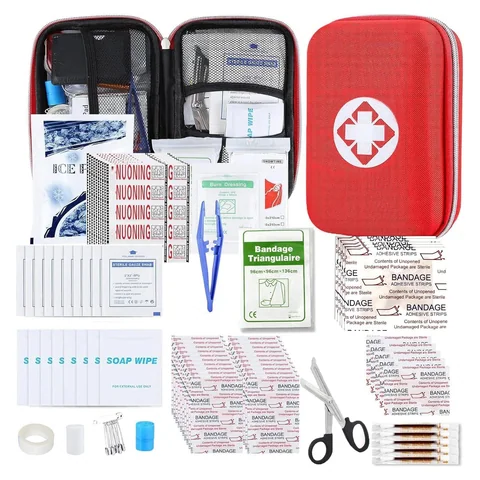
The contents card of the AMORNING kit, item by item, set against the Red Cross list for a family of four, and the short list of things you add yourself.
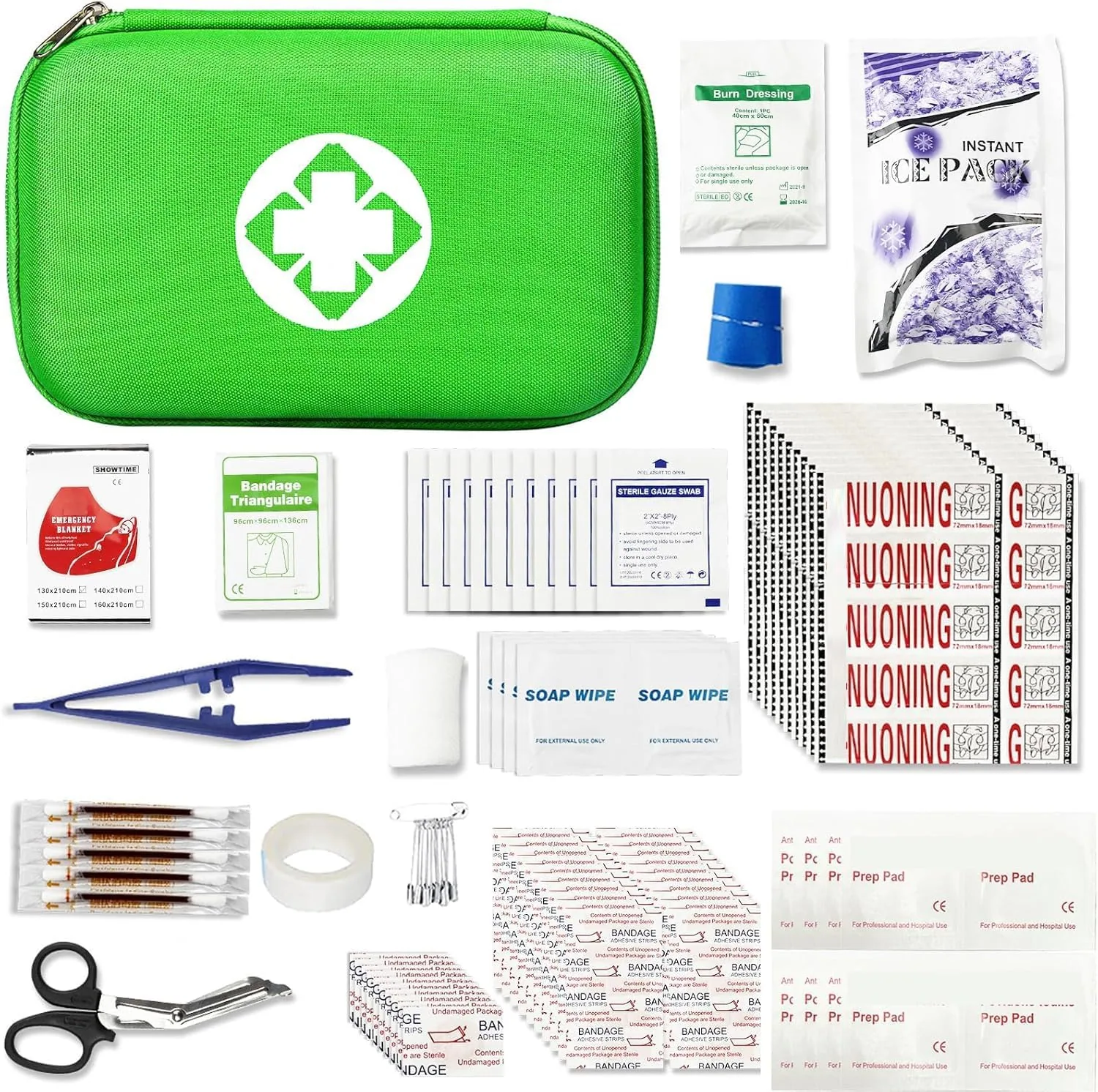
18 kinds of supplies plus the zip case, with 215 adhesive strips of three shapes making up most of the count. The rest covers cleaning a scrape, wrapping a sprain, cooling a bump and keeping someone warm.
The card lists what is packed, not why. Read it by job: strips for cuts and scrapes, wipes and swabs for cleaning, wraps and a burn dressing for anything a strip will not cover, and the ice pack, blanket and tools for the rest.
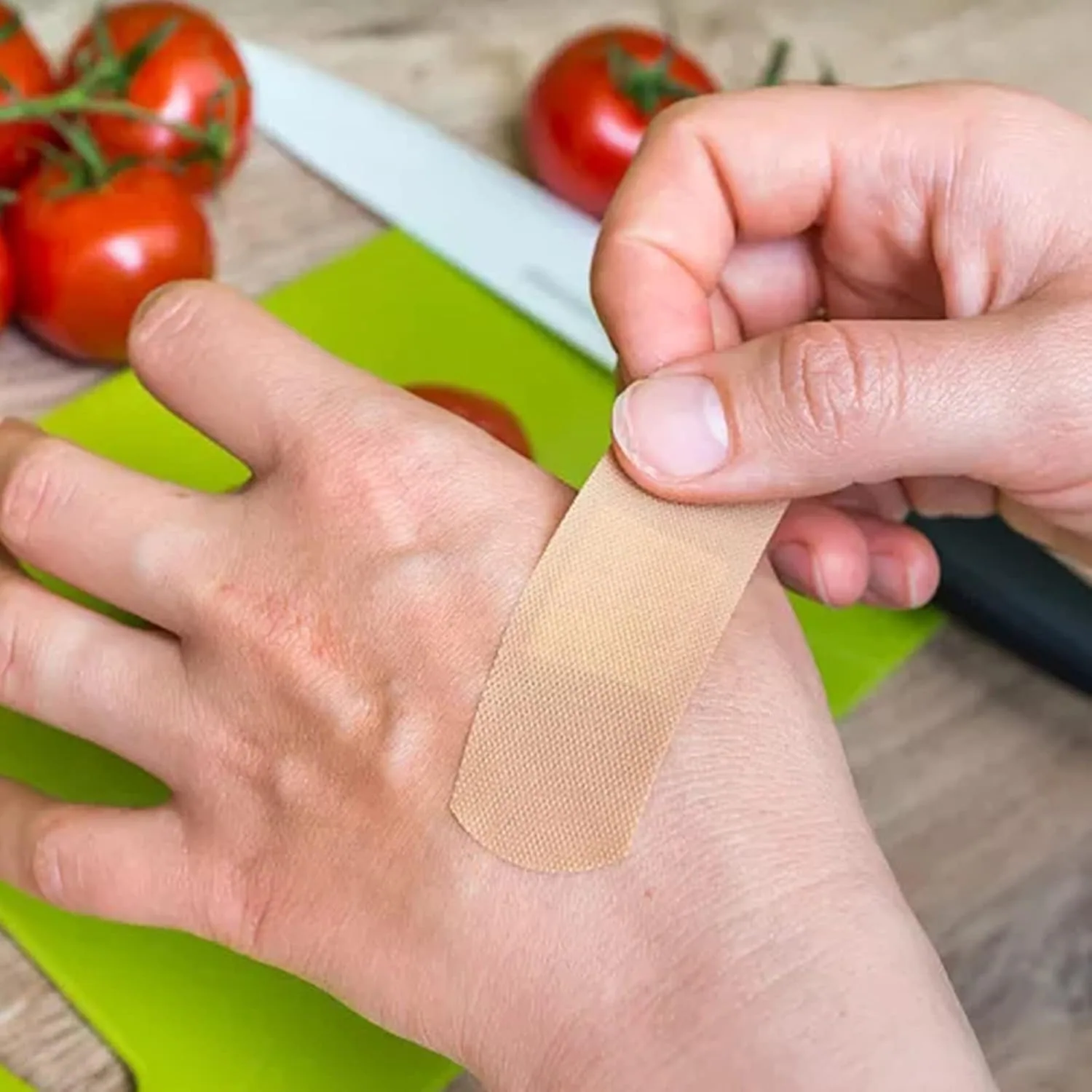
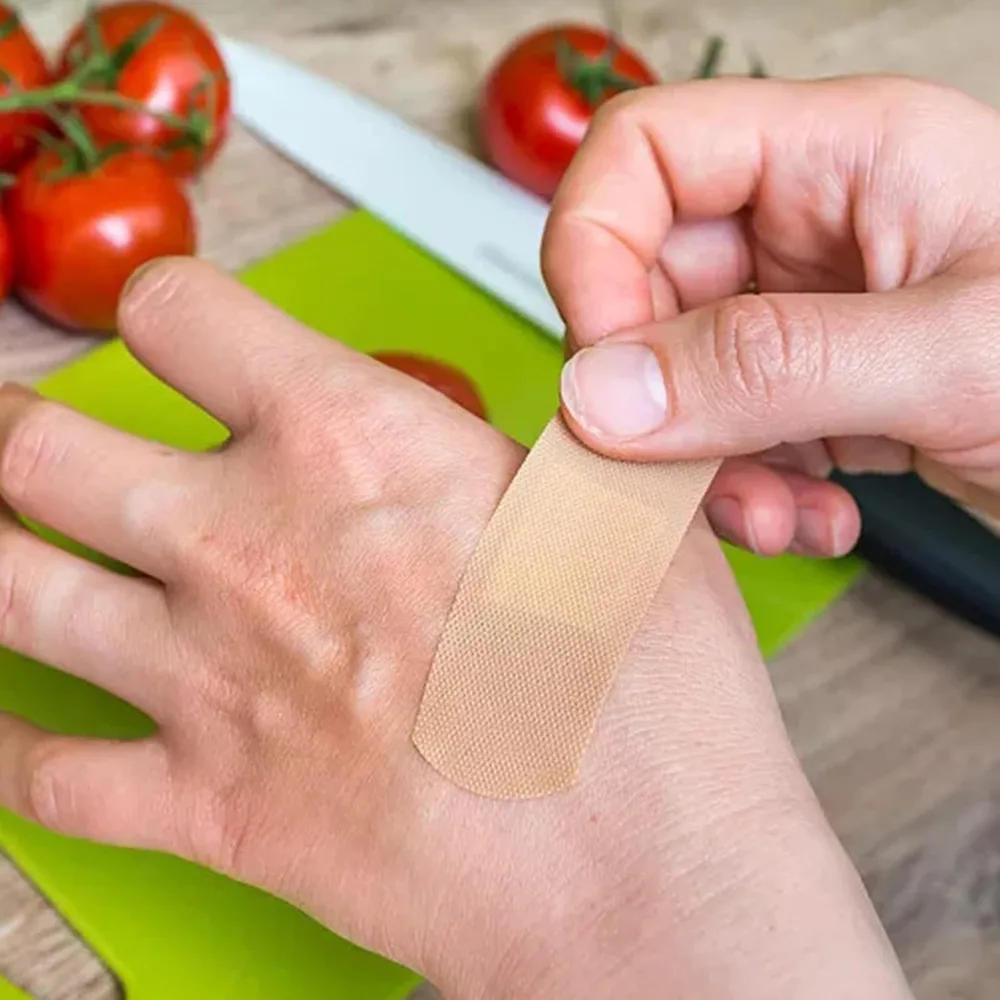
Two hundred strips sit in the case, plus 10 round ones and 5 butterfly strips. Round strips cover a knuckle or a fingertip where a long strip peels off. Butterfly strips hold the edges of a small cut together while you get it cleaned. For a family with kids, this is the part that runs out first.
Eight soap wipes, ten wipe pads, ten gauze swabs and five cotton swabs. Clean the skin around a scrape before the strip goes on, and keep the swabs for small spots where a pad is too big.
One triangle bandage, one roller bandage, one burn dressing and a roll of adhesive tape. The triangle bandage folds into a sling or a wide wrap. The roller bandage holds a pad in place on a knee or an ankle.
An instant ice pack, an emergency blanket, a tourniquet, plastic scissors, tweezers and safety pins. Start the ice pack the way its packet says. The emergency blanket keeps the wind off someone sitting on cold ground.
On 5 of the 7 items both list, the kit matches the list or carries more. It has 1 roller and 1 triangle bandage where the list has 2 of each. The list also adds gloves, medicines, a thermometer and printed instructions.
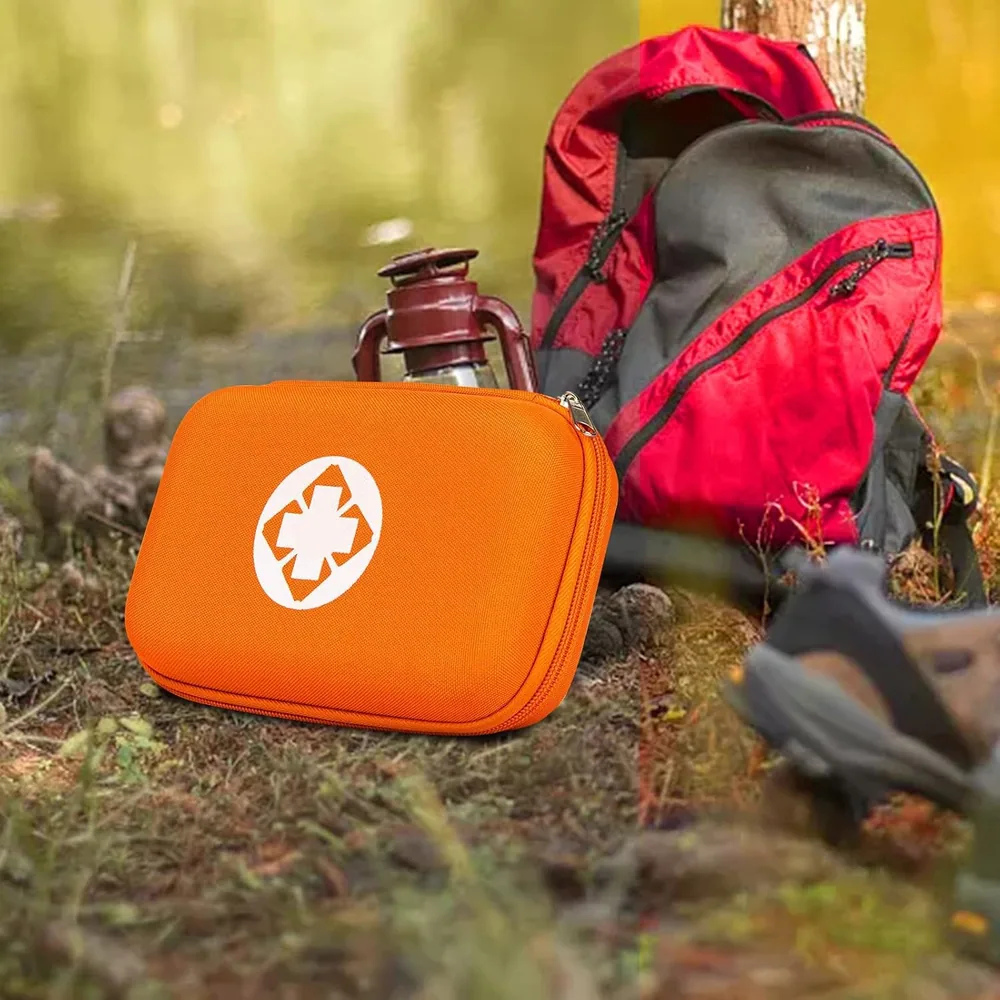
Some kits are designed for specific activities, such as hiking, camping or boating.
| Item | AMORNING kit | Red Cross list, family of four |
|---|---|---|
| Adhesive bandages | 215 strips, rounds and butterflies | 25 assorted |
| Gauze | 10 gauze swabs | 10 sterile pads, two sizes |
| Roller bandage | 1 | 2 |
| Triangular bandage | 1 | 2 |
| Cold compress | 1 instant ice pack | 1 instant cold compress |
| Emergency blanket | 1 | 1 |
| Tweezers | 1, plastic | 1 |
| Gloves | Add your own | 2 pairs, nonlatex |
| Ointments | Add your own | Antibiotic and hydrocortisone packets |
| Thermometer | Add your own | 1 oral thermometer |
The table compares items, not quality. A family kit built from the Red Cross list is bigger. A ready kit like ours is the one that is already in the car when the scrape happens.
5 things: gloves, the medicines your family uses, emergency phone numbers, a thermometer and a first aid booklet or card. Each fits in the lid pocket or in a zip bag next to the case.
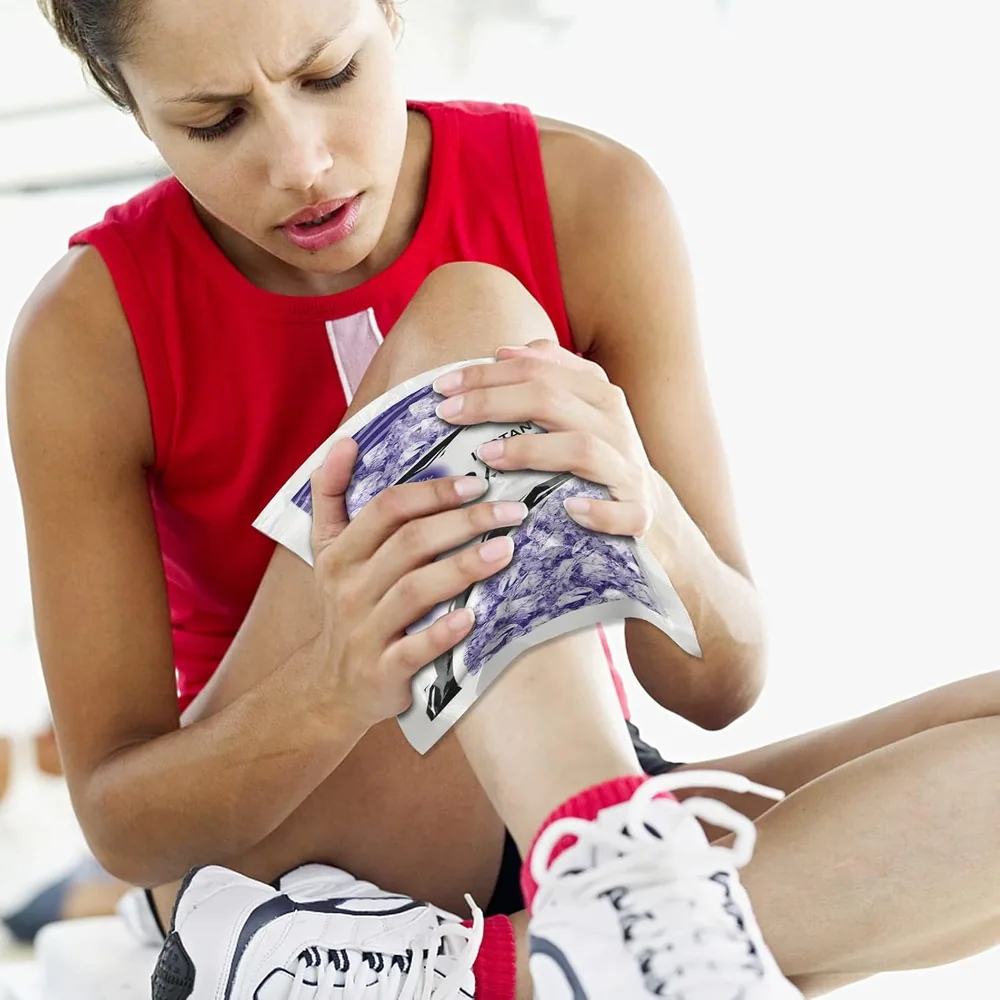
Include any personal items such as medications and emergency phone numbers or other items your health-care provider may suggest.
The kit's own tweezers are plastic. One buyer who gave the kit 3 stars said exactly that.
This is a nice size emergency kit. I use it for in my vehicle where it doesn't take up a lot of space. The tweezers in it are not very useful so I replaced them.
If you use tweezers for splinters, a metal pair is worth the space.
Check it every 3 months and after every use, and replace what you took.
Check expiration dates and replace any used or out-of-date contents.
Choose by place. The kit comes in 9 case colors with the same contents, so a color tells you which kit belongs where.
Red is easy to spot under a seat. Yellow and orange show up in a dark tent or a stuffed duffel. Black and camouflage stay low-key in a car door or a hunting pack. Pink and purple make a kid's sports bag kit easy to find.
AMORNING 276-Piece First Aid Kit
Red case · $16.99
See Price & ReviewsOur retail partner takes the order.
A first aid kit holds supplies for small injuries. For a serious injury, call 911.
Sources
First aid
Home, car, trail and sports bag: where the kit goes, and when to check it.
Garden
Stakes or T-tags, pencil or marker, and how to reuse labels next spring.